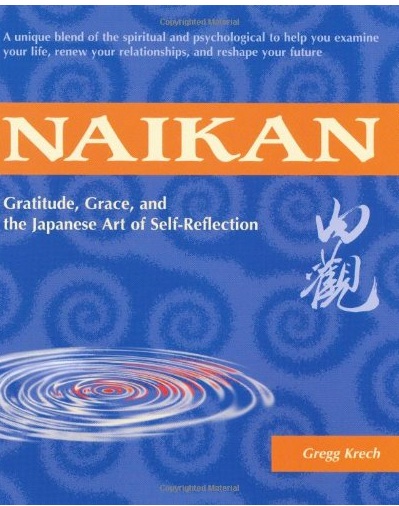
This week’s book is Naikan: Gratitude, Grace, and the Japanese Art of Self-Reflection by Gregg Krech. This is a Buddhist technique developed by Ishin Yoshimoto in the late 1940s as a way to reflect on yourself, the gifts you receive, the gifts you give and your actions. Naikan is an exercise in self-reflection with gratitude at its core.
This practice really allows us to be AWARE of the presence of the gratitude in our lives. I have recently spent some time with this and I can tell you that if you truly take the time to reflect on these questions that it will begin to transform your relationships and your appreciation of things around you because it changes your perception of everyone and everything.
The book leads you through 3 questions that you can reflect on each day.
1. “What have I received from?” Or another way to ask is who have I received from today? This question focuses on the gifts that we have received. It could be something small such as a smile, a door being held open or someone else doing their job well. When we begin to look deeper at the things that happen TO us or AROUND us we begin to appreciate the small things. We begin to focus on what is going RIGHT rather than what is going wrong. An example of this could be that we consider having fresh water a small thing that most of us would not even put on our gratitude list. However, we had an incident where our water was contaminated and we could only use bottled water. It was a huge inconvenience and I no longer considered it a SMALL thing.
2. “What have I given to today?” By focusing on what you are giving to those around you it REALLY takes away your sense of entitlement. You are REDIRECTED from that feeling of being owed something to looking for ways that you can bless someone else. This is important because perhaps if you stop to reflect on this you will realize that you could be giving more to others in the sense of love, peace or just holding the door for them.
3.”What troubles/difficulties may I have caused or contributed to?” We have a tendency to look at how others have wronged us. It is our natural instinct. This part of the practice forces us to think about how we may have pained someone else. Perhaps we were late for an appointment, but we had a really good reason. We tend to justify it. However, if someone causes us to be late we have a tendency to see fault with them. Take the time to really think about the inconvenience or trouble you may have caused someone else. This is a tough question because we don’t want to think about our faults. The author on the practice of Naikan says, “If we are not willing to see and accept those events in which we have been the source of others’ suffering then we cannot truly know ourselves or the grace by which we live.”
Sunshine & Sarcasm,
Lowi & G

 Lowi & G